
Pablo Picasso Spanish, 1881-1973
-
 "Oiseau au Ver" en collaboration avec Madoura, 1952

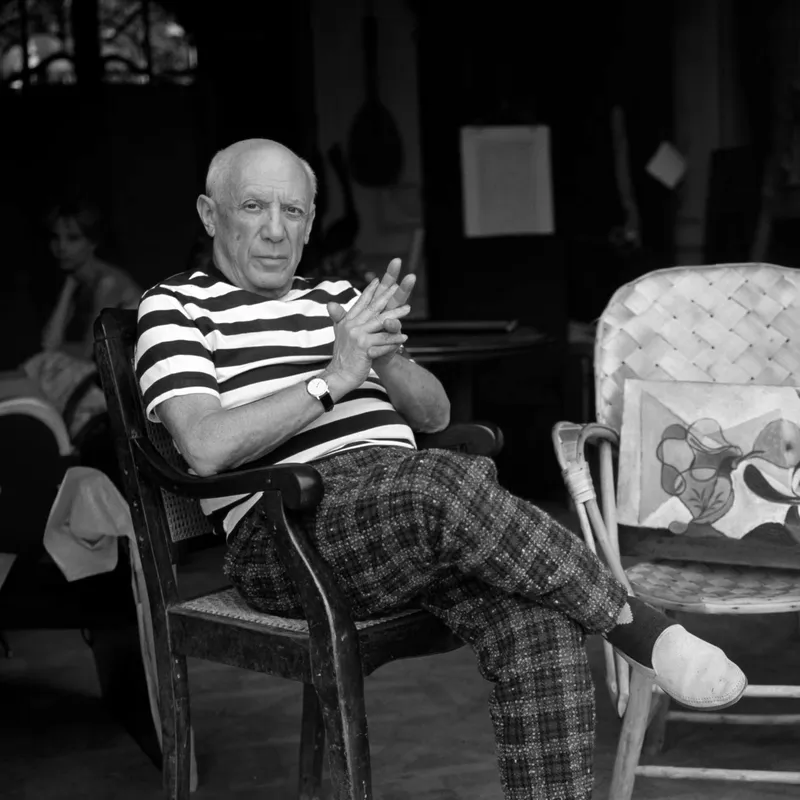
Pablo Picasso, born in 1881 in Málaga, Spain, stands as one of the most transformative and influential figures in the history of modern art. A painter, sculptor, printmaker, ceramicist, and stage designer, Picasso reshaped artistic expression through relentless experimentation and an extraordinary creative vision. Best known as a co-founder of Cubism, he revolutionized representation by fragmenting form and reimagining perspective, allowing multiple viewpoints to coexist within a single composition. Across his long career, his work evolved through distinct periods—most notably the Blue Period, marked by somber tones and themes of poverty and isolation; the Rose Period, characterized by warmer palettes and circus imagery; and the radical development of Cubism, which challenged centuries of artistic tradition. Picasso’s art reflects profound psychological depth, exploring themes of love, desire, suffering, violence, and identity. His imagery ranges from intimate portraits to monumental political statements, always infused with bold innovation and symbolic complexity.
Picasso’s artistic path was shaped early by his upbringing in a creative household. His father, a drawing teacher, recognized his son’s exceptional talent and provided rigorous academic training. After studying at the academies of fine arts in Barcelona and Madrid, Picasso moved to Paris in the early 1900s, immersing himself in the vibrant avant-garde scene of Montmartre. There, he developed lasting collaborations and friendships with writers and artists who fueled his experimental spirit. Together with Georges Braque, he pioneered Cubism, dismantling traditional perspective and constructing compositions from geometric planes. His groundbreaking 1907 painting Les Demoiselles d’Avignon marked a decisive rupture with classical aesthetics and opened new pathways for modern art. In 1937, responding to the horrors of the Spanish Civil War, he created Guernica, an immense monochromatic canvas that became a universal symbol of anti-war protest and human suffering.
Throughout his life, Picasso produced more than 20,000 works, continuously reinventing his style while maintaining an unmistakable artistic identity. He explored sculpture, ceramics, printmaking, and stage design with the same intensity he brought to painting. His later works display a raw, expressive energy, reflecting both mastery and spontaneity. International acclaim accompanied much of his career, with exhibitions and retrospectives solidifying his global reputation. Picasso remained creatively active until his death in 1973 in France, leaving behind a legacy that continues to shape contemporary art and inspire generations of artists worldwide.