
Arman French, 1928-2005

Works
  • Arman, Satisfaite, 1996
    Satisfaite, 1996
Biography
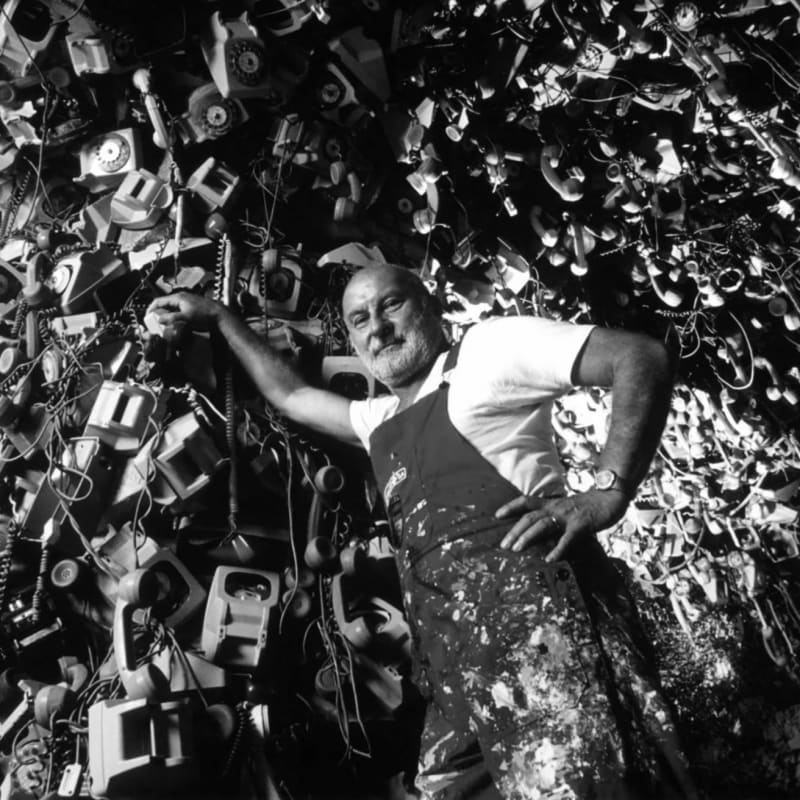
Arman, born Armand Pierre Fernandez (1928–2005), was a major French-American artist of the 20th century and is internationally recognized as one of the founders of Nouveau Réalisme. Born in Nice, he developed an early artistic sensitivity shaped by the cultural environment of his father, an antique dealer and amateur musician. His work is distinguished by a radical approach to everyday objects, which he accumulated, fragmented, cut, or destroyed to question consumer society, repetition, time, and memory. Through his iconic Accumulations, Colères, and Coupes, Arman transformed manufactured objects into powerful sculptures that are at once critical, poetic, and deeply rooted in their era.


Trained at the École des Arts Décoratifs in Nice, Arman formed close relationships early on with Yves Klein and other key figures of the European avant-garde. Influenced by Dadaism, Marcel Duchamp’s ready-mades, and gestural art, he quickly moved away from traditional painting to explore new modes of expression. At the turn of the 1960s, he played an active role in the emergence of Nouveau Réalisme alongside critic Pierre Restany, proposing an artistic vision grounded in the direct appropriation of reality. In 1961, Arman settled in New York, where he became an American citizen and established himself on the international art scene, while maintaining strong ties to France.


Arman’s career was marked by worldwide recognition and a sustained presence in major institutions. His works are held in numerous public and private collections, including the Centre Pompidou in Paris, the Museum of Modern Art in New York, and Tate Modern in London. He also created many monumental sculptures integrated into public spaces. Until his death in 2005, Arman continued to explore the tensions between creation and destruction, uniqueness and mass production, leaving behind an iconic body of work that continues to influence contemporary art.