Paul Villinski: Between the Deed and the Doing

  • “Art making is an act of revealing, an attempt to share human experience, to evoke what may be unexpressed, even...

    “Art making is an act of revealing, an attempt to share human experience, to evoke what may be unexpressed, even inexpressible, but widely felt.”

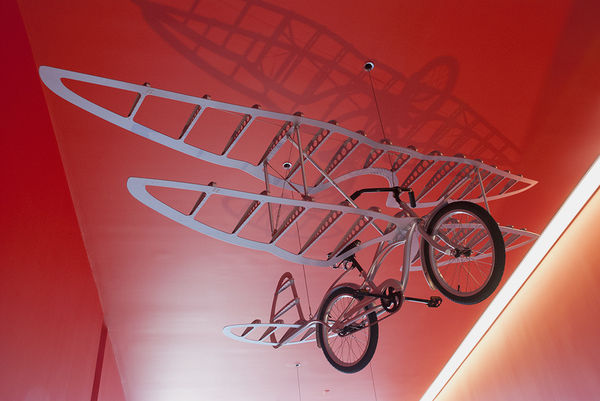
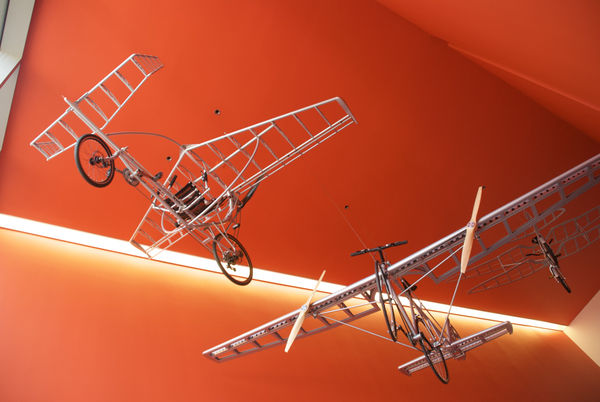
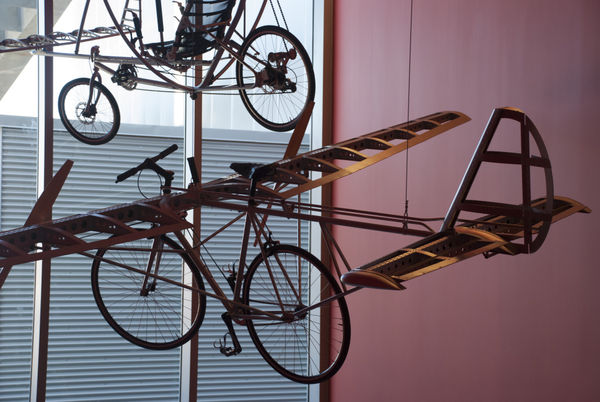
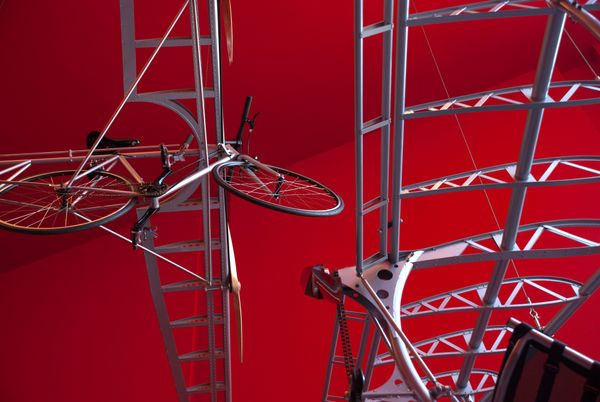
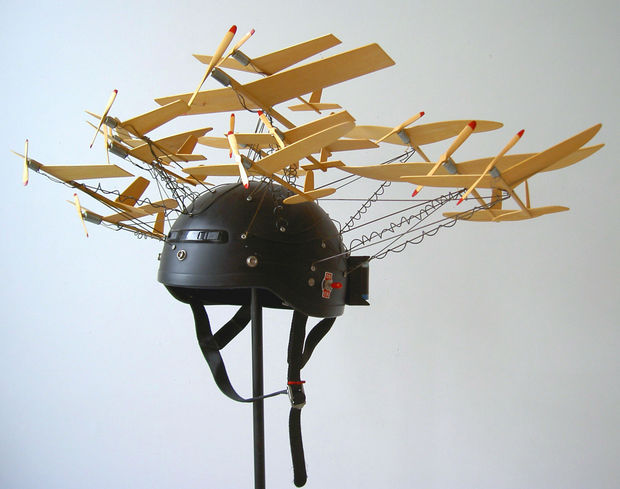
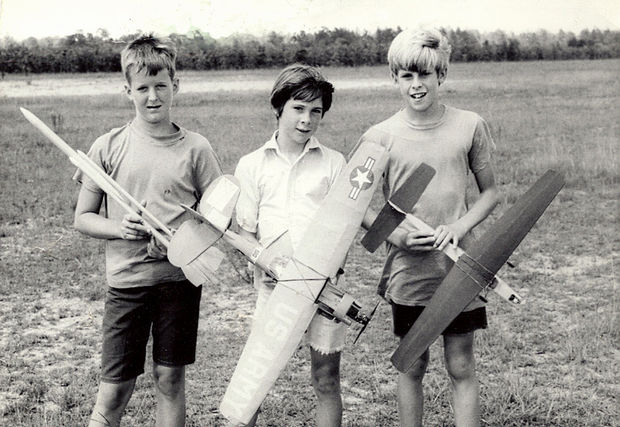
    Paul Villinski (b. 1960, Maine) grew up in a family shaped by constant movement as the son of a U.S. Air Force navigator, surrounded from an early age by aircraft, tools, music, and art. This unsettled childhood fostered both introspection and a lasting fascination with flight, not only as a physical phenomenon but as a way to think about distance, memory, and transformation. Early experiences building objects with his hands and observing the machinery of aviation left a durable imprint, later resurfacing in recurring motifs of wings, chairs, and improvised flying devices that would come to define his artistic language. 
     
    In the early 1990s, Villinski shifted decisively toward sculptural assemblage, using found materials such as discarded gloves, records, and everyday objects to construct his now-iconic winged works and airborne installations. These pieces transform ordinary remnants of daily life into images of lift and quiet transcendence, balancing fragility with resilience. Over time, repetition and transformation became central to his approach, with familiar forms reappearing across works as evolving metaphors rather than fixed symbols.
     
    Back to the main page 
  • Flight gradually moved from symbol to lived experience when Villinski began paragliding, translating a lifelong preoccupation into direct knowledge of...
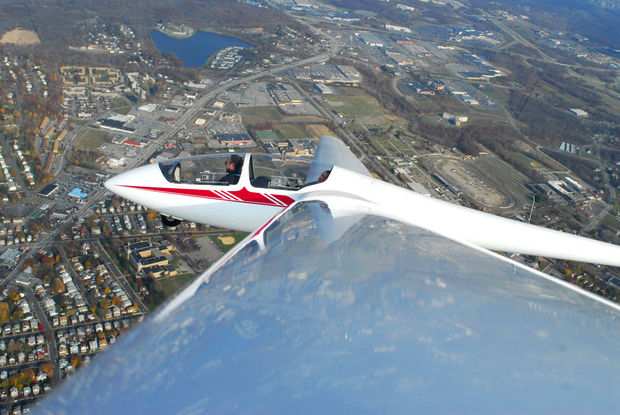
    Flight gradually moved from symbol to lived experience when Villinski began paragliding, translating a lifelong preoccupation into direct knowledge of air, gravity, and suspension. This encounter informed sculptures that hover between object and apparatus, evoking the charged instant of lift-off, a threshold between weight and release. Suspended chairs, winged constructions, and airborne forms suggest that movement is not an escape from the past but a way of carrying it forward in altered form.
     
    In later works such as Air Chair, a wheelchair reimagined with expansive wings and suspended in space, Villinski extended this language into reflections on mobility and possibility. By transforming objects associated with limitation into images of ascent, he frames constraint and freedom as inseparable conditions. Across more than three decades, his practice has evolved into a sustained meditation on change, assembling fragments of everyday life into quiet, poetic structures that hold tension between gravity and grace.
  • LOST GLOVES Discarded gloves scattered across the city are gathered as quiet traces of the people who once wore them....
    LOST GLOVES

    Discarded gloves scattered across the city are gathered as quiet traces of the people who once wore them. Separated from their owners, they retain an uncanny intimacy, carrying the imprint of labor, gesture, and daily life. Collected over years from different neighborhoods, they become an accidental archive that crosses age, class, and occupation, a portrait of presence through absence, marked by wear, loss, and memory.


    In the studio, these remnants are stitched and interwoven into new forms, vessels, coverings, and eventually wings, restoring their ability to hold, protect, and connect. The gloves carry the time of unknown hands, joined by careful, deliberate labor. What was once overlooked becomes a language of repair and interdependence, suggesting that fragments of ordinary life can be reassembled into structures that hold resilience and the possibility of lift.


    - Paul Villinski

  • Material Flight: The Work of Paul Villinski

  • “Art making is an act of revealing - a way to share human experience and discover what concerns me most.”...
    “Art making is an act of revealing  -  a way to share human experience and discover what concerns me most.”
     
    - Paul Villinski

    Paul Villinski’s work navigates a precise balance between the grounded and the airborne, transforming discarded materials into images of ascent while never concealing their origins. Butterflies cut from found beer cans, gilded, painted in cobalt Flashe, and dusted with soot, and wings assembled from hundreds of worn work gloves reveal an alchemy rooted in manual labor and everyday life. His installations retain a poetic sense of flight while conjuring the ordinary realities from which they emerge, from industrial debris to last night’s trash.


    Villinski’s practice also draws on childhood imagination and the desire to transcend one’s circumstances, expressed through objects that merge the industrial with the intimate. A dress stitched from work gloves, a vast wing span mounted on a child’s chair, or a single aluminum butterfly emerging from a glove suggest a language where labor, memory, and aspiration intersect. Across the work, flight appears not as fantasy but as a process shaped by real transformation, echoed in the artist’s own pursuit of flying and his study of butterfly species raised in his studio.